On this page
The short answer
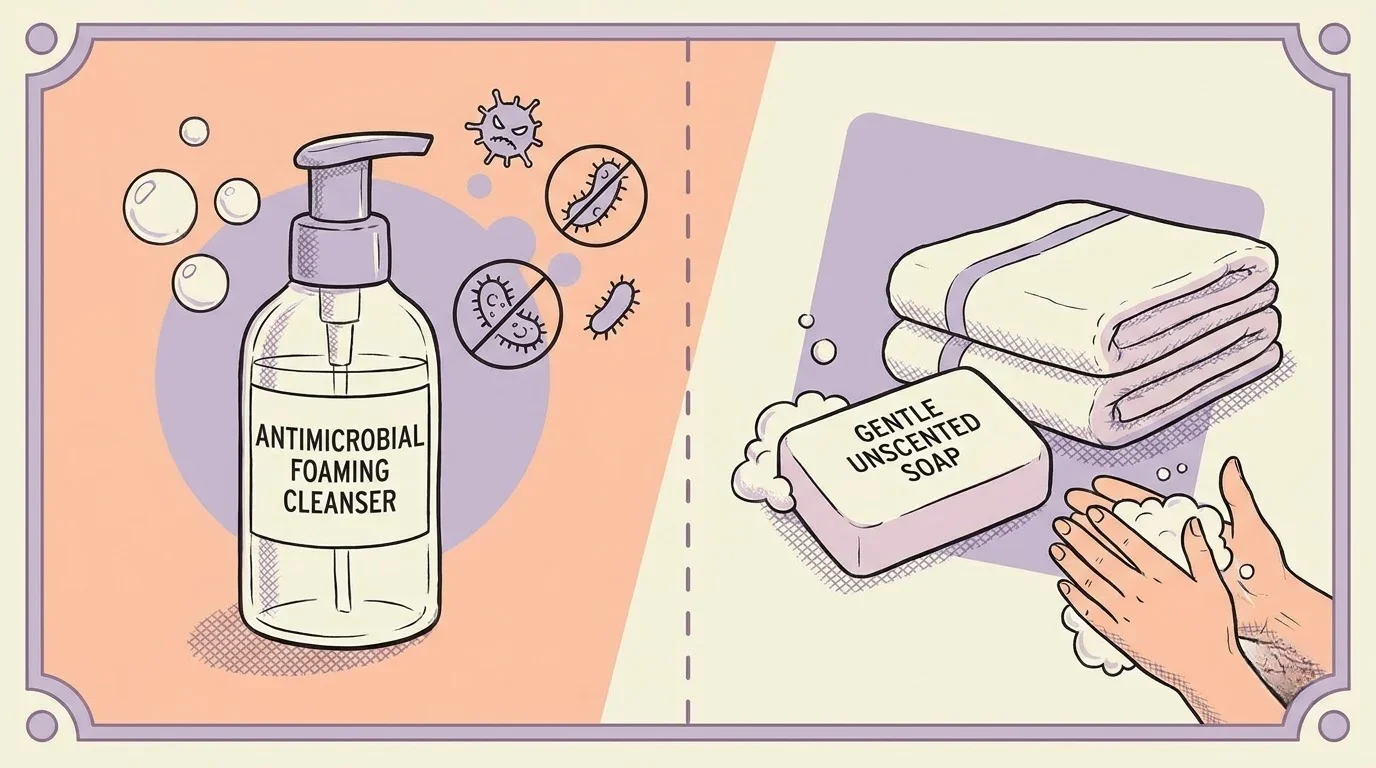
A gentle, fragrance-free liquid soap with warm running water is fully effective and doctor-approved for washing non-porous medical silicone, glass, and metal. Specialist antibacterial toy cleansers provide added convenience with fast-acting foaming action, require less vigorous rinsing, and guarantee zero skin-sensitising fragrances.
Side by side
| Detail | Specialist Toy Cleaner | Mild Unscented Soap & Water |
|---|---|---|
| Active cleaning agent | Benzalkonium chloride or tea tree antimicrobial foam | Mild surfactants that bind to oils and bacteria |
| Material compatibility | Formulated specifically not to degrade medical silicone or TPR | Safe if fragrance-free; harmful if using heavy dish detergents |
| Rinsing effort | Quick rinse or wipe-down depending on formula directions | Requires thorough rinsing under warm water to remove film |
| Microbiome irritation risk | Zero added perfumes; pH-balanced for intimate safety | Low if using pure unperfumed soap; high with scented soaps |
| Cost per clean | Approx. 15p to 30p per application (£10 to £16 per bottle) | Less than 1p per wash using domestic household soap |
How should I clean my toy?
Choose the material and water rating to see the steps that apply to your toy.
SiliconeNon-porous
- Wash with warm water and a mild, unscented soap or a toy cleaner.
- Rinse well so no soap or lube is left on the surface.
Some makers say solid silicone toys with no motor can be boiled. Only do this if your toy’s instructions say so.
Hard plastic (ABS)Non-porous
- Wash with warm water and a mild, unscented soap or a toy cleaner.
- Pay attention to seams and buttons, where lube can collect.
GlassNon-porous
- Wash with warm water and soap.
- Avoid sudden changes in temperature, which can crack glass.
Some glass toys are dishwasher-safe. Check the maker’s instructions first.
Stainless steelNon-porous
- Wash with warm water and soap.
- Dry fully so no water sits in engraved or textured areas.
TPE, TPR, jelly or “realistic skin”Porous
- Wash with warm water and a mild, unscented soap, inside and out.
- Rinse well, then let it dry completely before storing it.
- Use a condom over it if anyone else will use it, and change the condom between people.
These materials are porous, so they can hold bacteria even after cleaning. Keep porous toys for one person.
Not surePorous
- Treat it as porous: wash gently with warm water and mild, unscented soap, rinse and dry completely.
- Use a condom over it if it’s shared.
- Check the packaging or the maker’s website for the material.
Waterproof (IPX7 or IPX8)
You can wash it under running water. Make sure any charging port cover is closed first.
Splash-resistant, or not sure
Don’t put it under the tap or in water. Wipe it with a cloth dampened with soapy water, then with a clean damp cloth. Keep water away from charging points and battery compartments.
Not electric (no motor or battery)
You can rinse it freely under running water.
Every toy, every time
- Clean it before and after use.
- Dry it with a paper towel rather than a cloth, which can leave fibres behind.
- Store it dry, in its own pouch, away from other toys.
Based on guidance from Brook, SH:24, Essex Sexual Health Service and Brown University BWell. Always follow your toy’s own instructions.
Cleaning your intimate devices is not merely about aesthetic cleanliness; it is a critical safeguard against bacterial vaginosis, yeast infections, and urinary tract infections. After every session, bodily fluids, natural oils, and lubricant residue coat the device surface.
Manufacturers and retailers heavily promote dedicated antibacterial toy cleansers, but many doctors and sexual health clinics note that plain unscented soap and warm water work just as well. Deciding between the two comes down to understanding chemical compatibility with delicate silicone and what your bathroom routine actually looks like.
How soap and water neutralises pathogens
Soap molecules are amphiphilic, meaning one end bonds with water and the other bonds with fats and oils. Because viruses and bacteria possess protective lipid (fat) outer membranes, washing with soap and running water physically breaks those lipid bilayers apart, destroying the pathogen. The running water then washes the deactivated remnants cleanly down the drain.
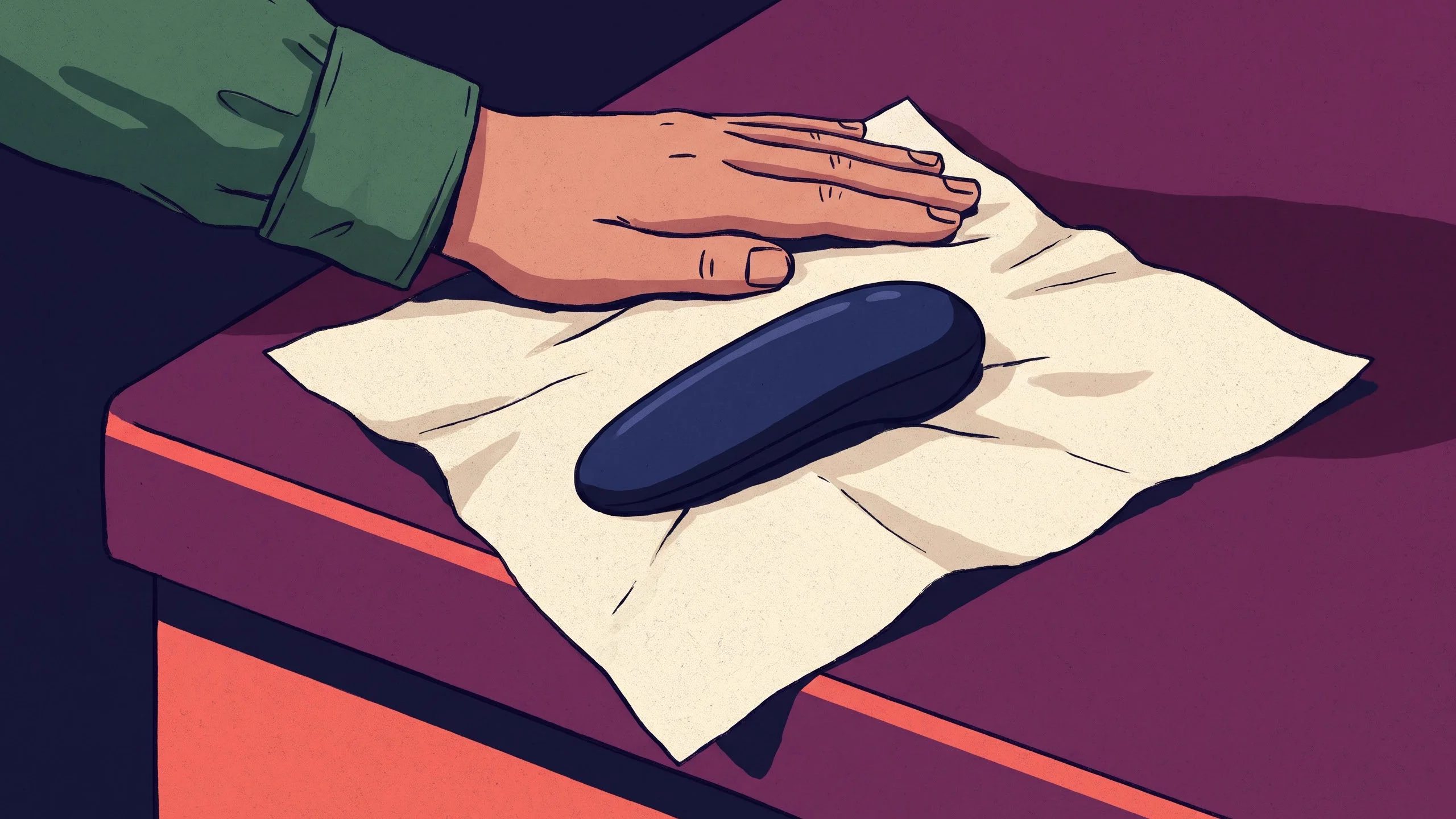
For non-porous materials such as medical-grade platinum silicone, borosilicate glass, and surgical stainless steel, a two-minute wash with warm tap water and a gentle unscented hand soap delivers hospital-level sanitisation.
However, using the wrong household soap can cause serious problems:
- Fragrances and dyes: Standard household hand soaps often contain synthetic perfumes that leave a chemical scent film on silicone. When next inserted, this residue disrupts vaginal pH and causes burning or irritation.
- Harsh dish detergents: Kitchen dish liquids are formulated to strip baked-on grease and contain aggressive surfactants. Repeated use leaches plasticisers from softer elastomeric materials and dries out silicone surfaces.
- Alcohol and bleach: Pure alcohol and bleach solutions cause silicone to harden, crack, and turn brittle, creating micro-fissures where bacteria can lodge permanently.
What specialist toy cleaners do differently
Specialist toy cleaners (such as Lovehoney Clean, Lelo Antibacterial Cleaning Spray, or System JO Foaming Cleanser) are formulated with specific intimate constraints in mind:
- Targeted antimicrobial agents: Most commercial cleaners use benzalkonium chloride, a gentle yet potent antibacterial agent that neutralises surface bacteria within sixty seconds without harming elastomers.
- Fast degreasing foam: Foam dispensers create thousands of micro-bubbles that penetrate silicone textures, ridges, and seams without needing vigorous scrubbing that could damage water seals.
- Rapid rinsing: Toy cleaners are formulated with water-soluble surfactants that rinse off in seconds without leaving a slick or soapy residue on the toy.
- Material testing: Established sex toy manufacturers formulate their cleaners to be chemically inert when in contact with silicone, polyurethane, ABS plastic, and TPE/TPR materials.
The financial trade-off
The primary downside of specialist toy cleansers is purchase cost. A 150 ml bottle of branded antibacterial foam typically retails between £9 and £16. If you use two or three pumps after every session, a bottle lasts approximately two to three months.
By comparison, a bar of pure unscented soap or a 250 ml bottle of fragrance-free liquid castile soap costs less than £2 and lasts six to nine months, resulting in an expense of less than 1p per clean.
When each option makes sense
Choose mild unscented soap and warm water if:
- You own water-sealed toys with an IPX7 rating that can be held under the bathroom tap.
- You want to minimise bathroom clutter and avoid ongoing specialty product costs.
- You have an unperfumed, sensitive-skin liquid hand wash or baby soap readily accessible.
Invest in a specialist foaming toy cleaner if:
- You own complex textured devices (such as male masturbators with deep internal ribbed canals) where liquid soap is difficult to rinse out completely.
- You keep toys in a bedroom where bringing warm water and soap bars is inconvenient.
- You prefer the peace of mind of a laboratory-tested formula guaranteed not to cloud, degrade, or pit your high-end silicone collection.
Quick check
Why should you avoid using standard household dishwashing liquids or perfumed hand soaps on silicone intimate devices?
Harsh degreasers, essential oils, and perfumes can degrade silicone polymers and irritate sensitive mucous membranes
Strong surfactants and fragrances leach into or pit elastomeric silicone, leaving micro-fissures and irritating residues.
Dishwashing soaps neutralise electric motor currents permanently
Soap does not affect internal electronics if the device is properly sealed; the danger is purely chemical material degradation and vaginal irritation.