On this page
The short answer
To choose a genuinely quiet vibrator, look for devices operating under 45 decibels with deep, low-frequency 'rumbly' motors rather than high-pitched surface buzzers. Avoid placing active toys against hard wooden furniture or hollow headboards (which act as acoustic amplifiers), dampen mechanical vibration by resting on a folded pillow, and prioritize thick medical-grade silicone casing that absorbs motor resonance.
Checklist
- Select motors operating under 45 dB with a deep, low-frequency pitch (<100 Hz).
- Avoid high-frequency treble buzzers that penetrate doors, floors, and drywall.
- Acoustically isolate toys from hard headboards, bedside tables, and bare bedframes.
- Use the folded pillow method to absorb mechanical energy and prevent structural resonance.
- Engage travel locks before storage to prevent accidental activation in drawers or bags.
Living in a shared apartment, a student flat, or an older home with wafer-thin drywall introduces an acute form of bedroom anxiety: the dread that your flatmates, family, or next-door neighbours can hear your intimate devices.
Almost every adult toy on the market claims to be “whisper quiet,” “stealthy,” or engineered with “discreet Japanese motors.” Yet anyone who has ever unboxed a cheap vibrator knows the sinking feeling of turning it on, only to hear a harsh, high-pitched mechanical drone that sounds like an angry electric toothbrush or a pocket drill.
Genuine bedroom discretion is not an accident of marketing; it is a matter of acoustics, mechanical engineering, and vibration physics.
Whether you are navigating university halls, a house share with friends, or simply value total auditory privacy, this guide breaks down decibel ratings, motor pitch frequencies, surface resonance traps, and verified quiet benchmark models across the US and UK markets.

1. Decibels Demystified: The Manufacturer Marketing Trap
When browsing adult retail stores, you will frequently see claims like “operating under 50 decibels (dB)”. To make sense of these claims, we first need to understand how sound is measured and how manufacturers exploit laboratory testing conditions.
Decibels are measured on a logarithmic scale, meaning that sound energy does not increase linearly:
- An increase of 3 dB represents a doubling of acoustic sound power.
- An increase of 10 dB represents a tenfold increase in sound energy and sounds roughly twice as loud to the human ear.
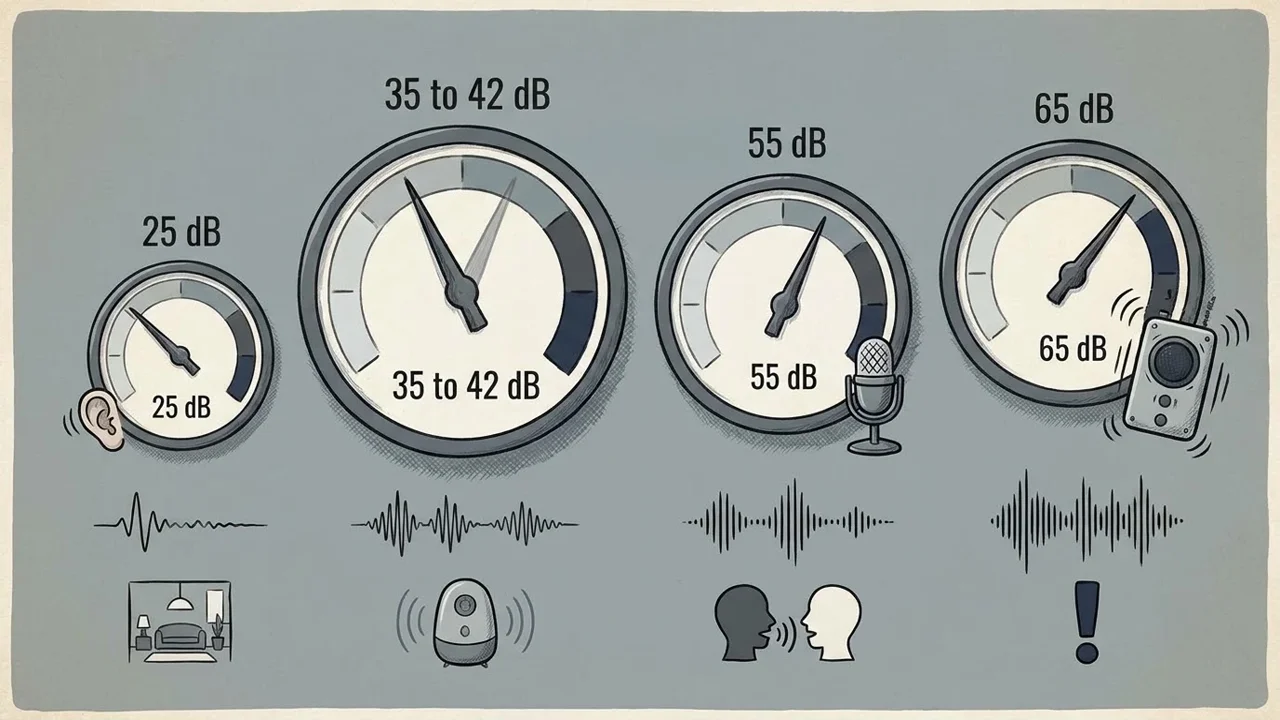
Here is how common bedroom sound levels compare:
| Sound Level (dB) | Real-World Environmental Reference | Vibrator Sound Classification |
|---|---|---|
| 20 – 30 dB | Quiet bedroom at midnight; gentle rustling leaves | Virtually silent; undetectable beyond 30 cm |
| 30 – 40 dB | Soft whisper; quiet library reading room | Stealth Tier: Completely contained within a closed room |
| 40 – 48 dB | Quiet home refrigerator; low-speed oscillating desk fan | Discreet Tier: Masked easily by bedsheets or background noise |
| 50 – 58 dB | Moderate rainfall; quiet office conversation | Noticeable Tier: Audible through hollow-core doors in quiet flats |
| 60 – 70 dB | Normal spoken conversation; background TV; hair dryer | High-Power / Audible: Requires music or structural isolation |
Why Retail Decibel Claims Can Be Misleading
Manufacturers typically measure decibels in anechoic acoustic testing chambers under artificial conditions:
- Distance Manipulation: The microphone is often placed 1 metre (3.3 feet) away from the device rather than the realistic 10–20 centimetres of an intimate bedroom setting.
- Free-Air Testing Without Load: Toys are tested running freely in mid-air. When pressed against pelvic tissue or wrapped in bedding, motor resistance changes, shifting the motor’s acoustic profile.
- Lowest-Speed Ratings: The advertised “under 40 dB” statistic almost invariably refers to the device’s lowest, weakest pulsating setting—not the continuous high-speed setting most users actually enjoy.
2. Frequency Physics: High Treble Buzz vs Deep Bass Rumble
Decibel volume is only half the battle. The frequency (measured in Hertz, or Hz) of the motor dictates whether a sound escapes your bedroom and attracts attention.
Intimate device motors generally fall into two distinct mechanical categories:
1. High-Frequency “Buzzy” Motors (150 – 250+ Hz)
- The Engineering: Driven by small, inexpensive high-RPM eccentric rotating mass (ERM) micro-motors.
- The Sound: A sharp, piercing mosquito-like whine or treble buzz.
- Acoustic Penetration: High-frequency soundwaves have shorter wavelengths that bounce off hard surfaces and slip easily through tiny air gaps beneath hollow bedroom doors and HVAC vents.
- Sensory Quality: Creates intense surface-level stimulation that frequently leads to numbness, itching, and sensory fatigue after 5–10 minutes.
2. Low-Frequency “Rumbly” Motors (50 – 100 Hz)
- The Engineering: Built with counterweighted, high-torque motors encased in heavy, dense silicone housings.
- The Sound: A deep, low-pitched mechanical hum resembling a distant cat purr or a muted smartphone vibration.
- Acoustic Penetration: Low-frequency air sound lacks the sharp transients that human ears instinctively detect. Unless it touches a hard resonant surface, low hums get muffled and trapped inside soft mattresses, duvets, and pillows.
- Sensory Quality: As documented in clinical studies published in the Journal of Sexual Medicine, lower-frequency vibrations penetrate deeply into erectile and clitoral crura tissues without causing epidermal numbness.
[!TIP] The Human Ear Bias: The human ear is biologically tuned to be hyper-sensitive to frequencies between 1,000 Hz and 4,000 Hz (the frequency of human speech and crying babies). A 45 dB high-pitched treble buzz triggers immediate cognitive alertness in your flatmates, whereas a 45 dB deep low rumble blends seamlessly into ambient background house hums.
3. The Surface Resonance Trap: Why Headboards Act as Loudspeakers
Most noise complaints in shared flats have nothing to do with airborne sound; they are caused by structure-borne mechanical resonance.
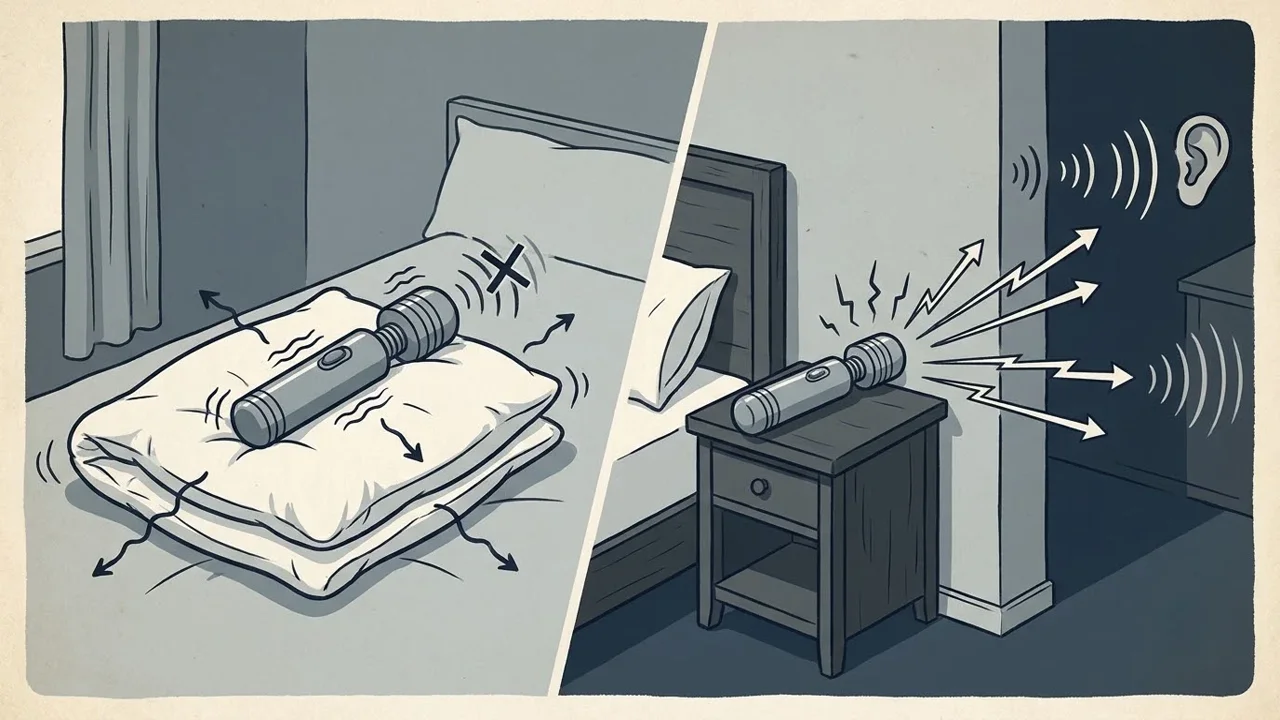
When an active vibrator touches a hard object—a wooden bedside table, an unpadded wooden bedframe, or a drywall partition—the mechanical energy transfers directly into the solid material. The wooden panel or wall acts as an acoustic soundboard (exactly like the wooden body of an acoustic guitar or cello), amplifying the vibration by 15 to 25 decibels!
Common Bedroom Resonance Culprits
- Wooden Headboards: If your bedframe shakes against drywall, the vibration travels through the structural timber and reverberates directly into the adjoining room.
- Uncarpeted Floorboards: Bed legs resting on bare hardwood or laminate transmit mechanical shudder through the subfloor into the ceiling of the downstairs flat.
- Nightstands: Resting an active toy on a nightstand while adjusting pillows can startle an entire household within seconds.
4. Bedroom Dampening Tactics for Shared Living
If you live in close quarters, employing acoustic isolation strategies allows you to use almost any quality device with total peace of mind:
The “Folded Pillow” Decoupling Method
The most effective way to eliminate structure-borne noise is mechanical decoupling.
- Place a firm, folded pillow or dense memory-foam cushion directly beneath your hips and lower pelvis.
- The cellular foam and fibrous layers act as a mass-spring damper, absorbing the mechanical oscillations of the motor before they can reach the bed slats or frame.
Strategic Ambient Sound Masking
Human ears detect unwanted sounds through acoustic contrast—the difference between the intrusive noise and the ambient room baseline.
- In a silent 25 dB room, a 40 dB vibrator is immediately noticeable.
- If you turn on an oscillating desk fan, a portable HEPA air purifier, or play low Lo-Fi music or brown noise (generating a gentle 42 dB ambient floor), the vibrator becomes completely inaudible beyond two paces.
Duvet Enclosure
A high-tog down or feather duvet is a phenomenal acoustic absorber. Keeping your lower body tucked beneath the duvet rather than uncovered traps airborne motor whines within the fabric air pockets, cutting escaping sound by up to 8 to 12 decibels.
🛑 Bedroom Myth-Busting: "Waterproof Vibrators Are Always Quieter"
The Myth: "If a vibrator is fully IPX7 waterproof, the airtight silicone seal will trap all the motor noise inside, making it silent."
The Reality: Waterproofing prevents water molecules from entering electrical seams, but sound travels through dense solids faster than through air. If a waterproof toy has an uninsulated, rigidly mounted internal motor, the mechanical vibrations transfer directly through the hard internal skeleton into the outer silicone skin. Silence is achieved through internal silicone motor-mount dampening, balanced counterweights, and motor pitch engineering—not merely an IPX7 seal.
5. Acoustically Benchmarked Models: Real-World Discretion
To give you tangible benchmarks, here are three real-world devices evaluated for acoustic performance, motor frequency, and structural discretion:
1. The Stealth Standard: We-Vibe Tango X
- Acoustic Profile: Ultra-quiet deep rumble (~40–42 dB under load).
- Motor Character: Driven by a balanced high-torque micro-motor encased in a thick, velvety silicone sleeve. It produces a deep bass hum rather than a treble screech.
- Best For: Absolute privacy in shared student flats and compact bedroom suites.

2. The Luxury Disguise: LELO MIA 3
- Acoustic Profile: Whisper-quiet precision (~36–39 dB at medium settings).
- Motor Character: Swedish-engineered micro-motor housed inside a sleek, metallic lipstick-style casing. The external sound is so faint that it is virtually inaudible beneath light bed coverings.
- Best For: Travel, discreet nightstand storage, and shared households where discretion in transit is critical.

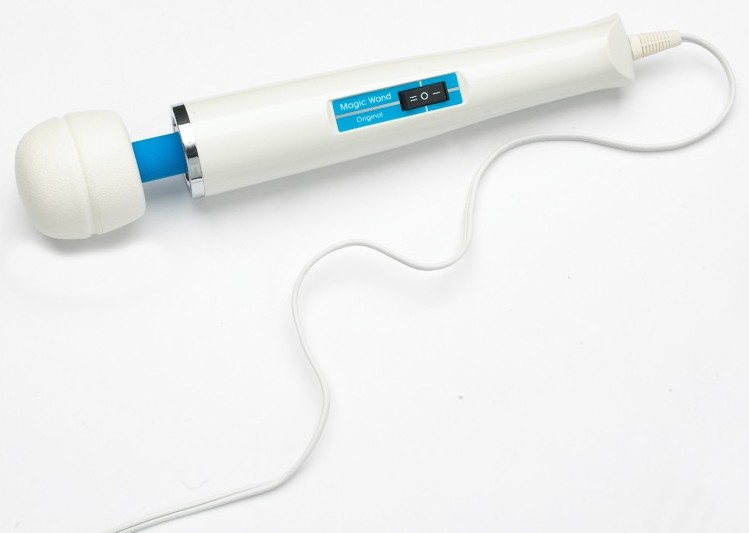
3. The Power vs Discretion Contrast: Magic Wand Original
- Acoustic Profile: Heavy industrial power (~58–64 dB).
- Motor Character: Driven by a massive, mains-powered electric motor producing unmatched, deep, muscle-penetrating vibrations. However, the sheer mechanical torque creates substantial airborne sound and intense surface resonance.
- Best For: Unmatched power when privacy is not an issue, or when paired with rigorous pillow decoupling and background music.
6. Dual-Market Buying Guide (US 🇺🇸 & UK 🇬🇧)
Below is an objective comparison of verified quiet models across primary price tiers, complete with acoustic testing benchmarks and authorized retailers in both the United States and the United Kingdom:
| Model & Silhouette | Acoustic Level & Pitch | 🇺🇸 US Retail (USD) | 🇬🇧 UK Retail (GBP) | Verified Retailers |
|---|---|---|---|---|
| We-Vibe Tango X (Precision Bullet) |
< 42 dB Deep bass rumble; low pitch |
$69 – $79 | £59 – £69 | 🇺🇸 Lovehoney US / We-Vibe US 🇬🇧 Lovehoney UK / Bondara |
| LELO MIA 3 (Lipstick Bullet) |
< 38 dB Whisper quiet; muffled micro-motor |
$89 – $99 | £79 – £89 | 🇺🇸 LELO US / Babeland 🇬🇧 LELO UK / Lovehoney UK |
| Satisfyer Pro 2 Gen 3 (Air-Pulse Suction) |
< 44 dB (sealed) Low rhythmic thumping; air seal |
$55 – $65 | £45 – £55 | 🇺🇸 Lovehoney US / Babeland 🇬🇧 Lovehoney UK / Bondara |
| Dame Kip (Ergonomic Flutter) |
< 43 dB Deep, rumbly cupping motor |
$85 – $95 | £75 – £85 | 🇺🇸 Babeland / Dame Products 🇬🇧 Lovehoney UK |
| Lovehoney Magic Bullet (Entry Budget Bullet) |
46 – 50 dB Mid-frequency buzz; requires pillow |
$19 – $25 | £14 – £19 | 🇺🇸 Lovehoney US 🇬🇧 Lovehoney UK |
[!NOTE] Discreet Doorstep Delivery: Both US retailers (Lovehoney, Babeland) and UK retailers (Lovehoney UK, Bondara) dispatch all orders in plain, sturdy cardboard packaging with no adult branding or product descriptions on the exterior label. Bank statements reflect neutral business names (e.g. “LH Trading” or “B-Retail”).
7. Pro-Tips for Acoustic Discretion
🔥 Tap to Reveal Proven Bedroom Discretion Hacks
Pro-Tip 1: The Bedpost Rubber Isolator Hack
If your bedframe vibrates noticeably against wooden floorboards or a shared party wall, purchase a set of inexpensive rubber washing machine anti-vibration pads (costing under $10 / £8). Placing one under each bed leg physically absorbs structural shudder, preventing vibrations from conducting into the floor below.
Pro-Tip 2: The Brown Noise Acoustic Curtain
While white noise contains equal energy across all audible frequencies and can sound harsh or hissy, brown noise focuses heavily on lower frequencies (like the gentle rumble of a distant waterfall or jet engine). Playing brown noise from your phone masks the mechanical hum of a vibrator motor far more effectively than classical music or speech.
Pro-Tip 3: Always Engage the Travel Lock in Storage
Few experiences are more harrowing than a bedside drawer or gym bag buzzing loudly when friends are visiting. High-end quiet vibrators feature a travel lock function—usually activated by holding the power button for 3 to 5 seconds until the LED flashes. Always test the lock before storing the device in a drawer.
Frequently Asked Questions
What decibel level is genuinely undetectable through a bedroom door?
In standard residential construction with hollow-core wooden interior doors, any device operating under 42 decibels with a low-frequency rumble is virtually undetectable outside a closed door. If you pair the device with light background sound (such as a desk fan or low television), sound output up to 46 decibels remains entirely private.
Are air-pulse clitoral stimulators quieter than traditional vibrators?
When properly applied to the body, yes. Contactless air-pulse toys (such as Womanizer or Satisfyer models) create gentle pressure waves rather than relying on a heavy oscillating weight. When sealed firmly against the clitoris, they operate at a muted, rhythmic thumping level of 38 to 44 decibels. However, if you break the skin seal while running on high power, the device will make a loud, rhythmic suction popping sound.
Why do cheap vibrators sound so much louder than luxury models?
Entry-level budget vibrators under $20 / £15 typically use low-cost eccentric rotating mass (ERM) micro-motors spinning at high revolutions (10,000+ RPM) with minimal internal dampening. The motor’s vibration transfers directly into thin, rigid plastic casing, creating a harsh, high-pitched treble buzz. Luxury devices invest in high-torque, lower-RPM motors encased in thick shock-absorbing medical silicone and balanced counterweights.
Can my flatmates hear a vibrator through the floorboards?
If the vibrator is touching a hard surface (the floor, a bedpost, or a rigid bedframe), yes. Mechanical vibrations travel rapidly through timber subfloors and drywall studs. However, if you rest on a mattress with a folded pillow beneath your hips, the mechanical energy is completely absorbed, preventing sound from transferring through floorboards.
How do I safely test how loud my vibrator is before using it?
Turn the toy on to your preferred speed and place it on your bed beneath your normal duvet. Walk outside your bedroom, close the door completely, and stand in the hallway for 15 seconds. If you have thin walls, also step into the hallway while running your bathroom fan or bedroom fan; you will immediately realize that ambient household sounds drown out muted low-frequency vibrations.
Does placing a towel over a vibrator make it quieter?
Yes. Layering soft textiles (towels, flannel sheets, heavy down duvets) introduces porous acoustic absorption. The millions of tiny air trapped pockets inside the weave capture high-frequency air sound and dissipate mechanical energy, reducing perceived volume by 5 to 10 decibels.
Sources, Clinical Methodology & Editorial Disclosures
- Acoustical Society of America (ASA): Cavanaugh, W. J., Wilkes, J. A. Architectural Acoustics: Principles and Practice. Research on structure-borne sound isolation, airborne transmission loss, and room acoustics.
- Journal of Sexual Medicine: Clinical research investigating the sensory differentiation between low-frequency mechanical stimulation and high-frequency surface desensitisation in human pelvic nerve pathways.
- International Society for Sexual Medicine (ISSM): Consumer guidance on ergonomic design, motor thresholds, and non-porous material standards for intimate personal wellness devices.
- ISO 3533:2021: International Organisation for Standardisation — Sex toys: Design, mechanical safety, electrical requirements, and consumer information criteria.
- Affiliate Disclosure: FlingZoe is an editorially independent sexual wellness publication. We evaluate products objectively across both the US and UK markets. If you purchase through our verified retailer links, we may earn an affiliate commission at zero additional cost to you. We never accept paid placements, free gifts, or sponsored reviews in exchange for positive rankings.
Quick check
Why does a 45 dB high-pitched buzzing vibrator carry through bedroom walls more noticeably than a 45 dB low-frequency rumbly vibrator?
Higher acoustic frequencies produce piercing soundwaves that easily cut through interior air and door gaps, whereas low rumble dissipates faster in soft furnishings.
Spot on! High-frequency treble buzz (150–250 Hz) pierces air gaps and uninsulated door thresholds, whereas low-frequency rumbles are absorbed by mattresses and bed linens unless mechanically coupled to hard wood.
Low-frequency rumbles produce twice as many decibels, masking any airborne sound completely.
Decibels measure sound pressure level, not pitch. High-frequency buzzing sounds sharper and more conspicuous to human ears even at identical decibel levels.