On this page
The short answer
Start with a bullet if short length matters, a lipstick shape if you want a slim body, or a mini wand if you want a separate handle. Look up the grip, controls and charging method on the exact model before buying.
Checklist
- Compare overall length and the widest part.
- Find the grip area and the off control in a photo or manual.
- Check the directions for intended use, charging and care.
Three models on the same scale
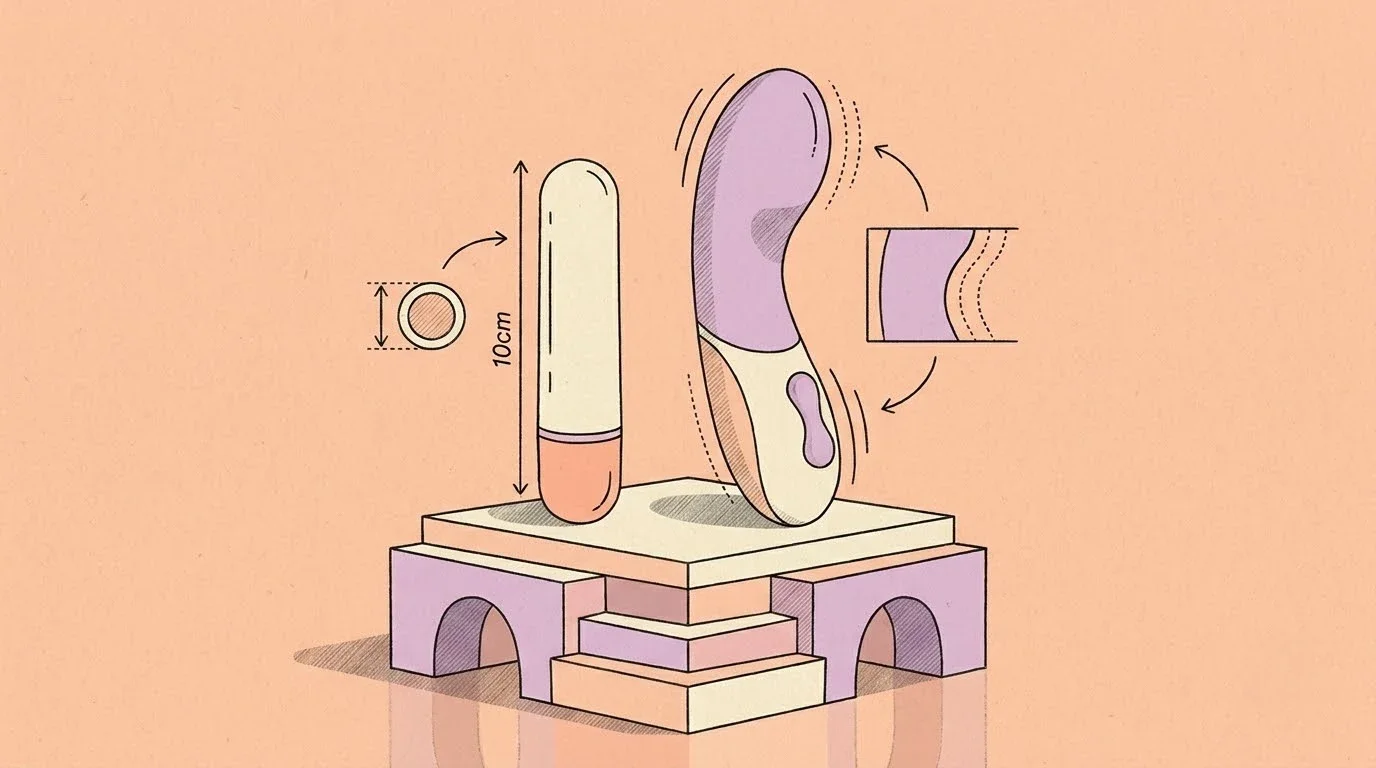
See how much length each model would take up in a drawer or travel pouch.
- We-Vibe Tango XBullet9.98 cm
- LELO MIA 3Lipstick-style11.1 cm
- Lovehoney Power Play Mini WandMini wand16.51 cm
You can put a bullet vibrator and a mini wand on the same strip of paper and see one difference in seconds. The wand usually has a separate handle and a broader head. The comparison gets trickier when a shop calls one compact model a bullet and another a lipstick vibrator. In fact, the same Tango X appears under both labels on different sites. Use the name to find a group, then look at where you would hold the object and how much of it would sit in your hand.
Bullet for a compact grip
A bullet generally has a narrow body and a small contact surface. On the We-Vibe Tango X, the narrow, slanted tip and the wider grip are easy to see in a side view. The manufacturer lists it at 9.98 cm long. Its manual shows separate controls for intensity and pattern. If a short body appeals to you, check where those controls sit when you hold the model in the way that feels natural to you.
A short body can be useful when you have limited storage. It can also leave less room for your fingers. Use a photo against the published dimensions to get an idea of the usable grip. If the button is at an end, think about which finger can reach it. If you want to see how the Tango X charges and what comes in the box, the Tango X overview covers those details.
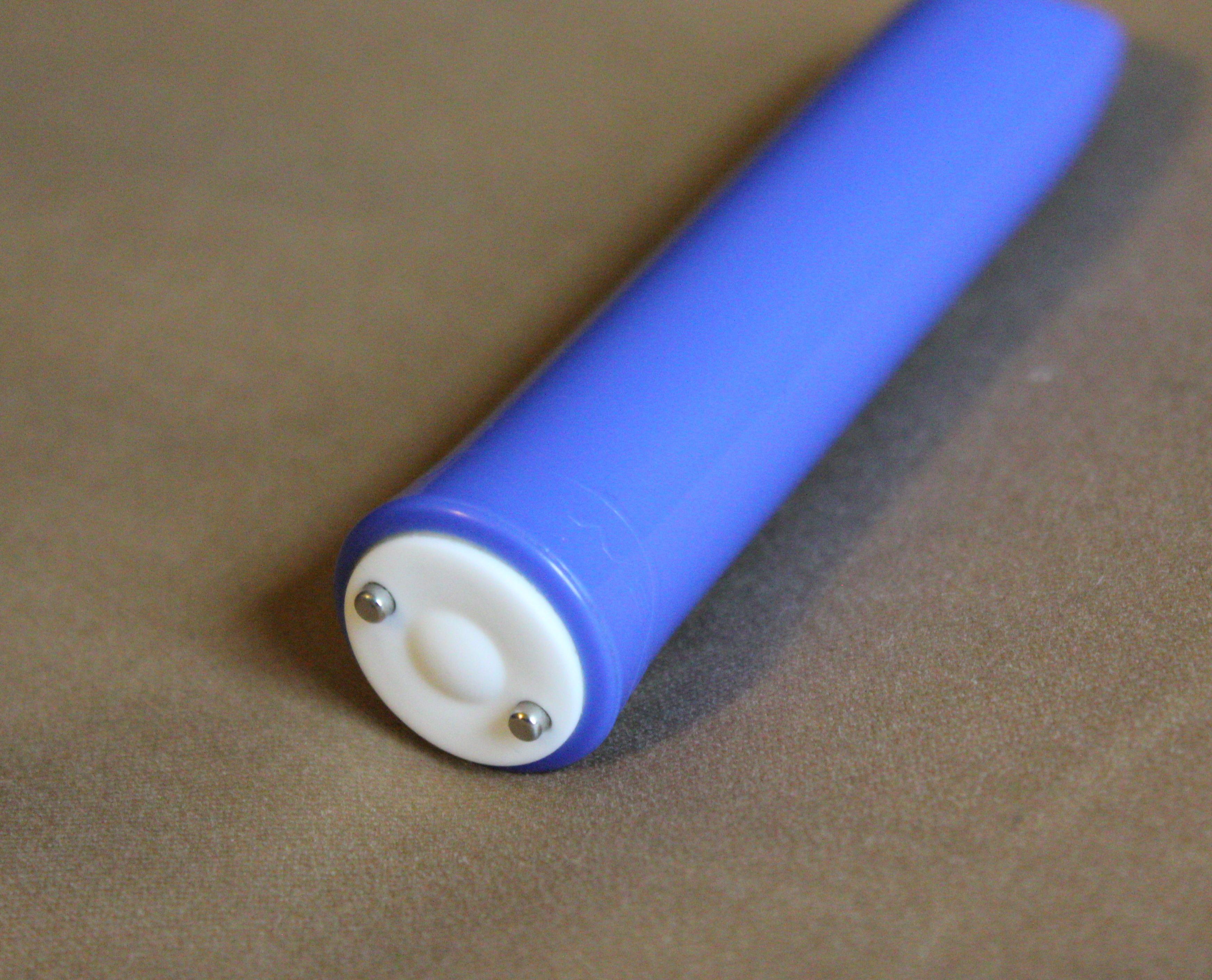
The older Tango in the photo is a useful example of an end-button design. Pick up that detail in a listing and you’ll know which page of the manual to look for. Models with very similar outlines can use a different control layout, as the older Tango and Tango X illustrate. Check the exact name before using a photograph to decide how controls work.
Lipstick shape for a narrow case
A lipstick-style model has a narrow outline and often resembles a cosmetic case. The LELO MIA 3 is 11.1 cm long and 2.2 cm wide. Its length sits just above the Tango X, so if you’re choosing between the two for a small pouch, measure the pouch opening and its usable width. A narrow shape can still take up most of the length of a case.
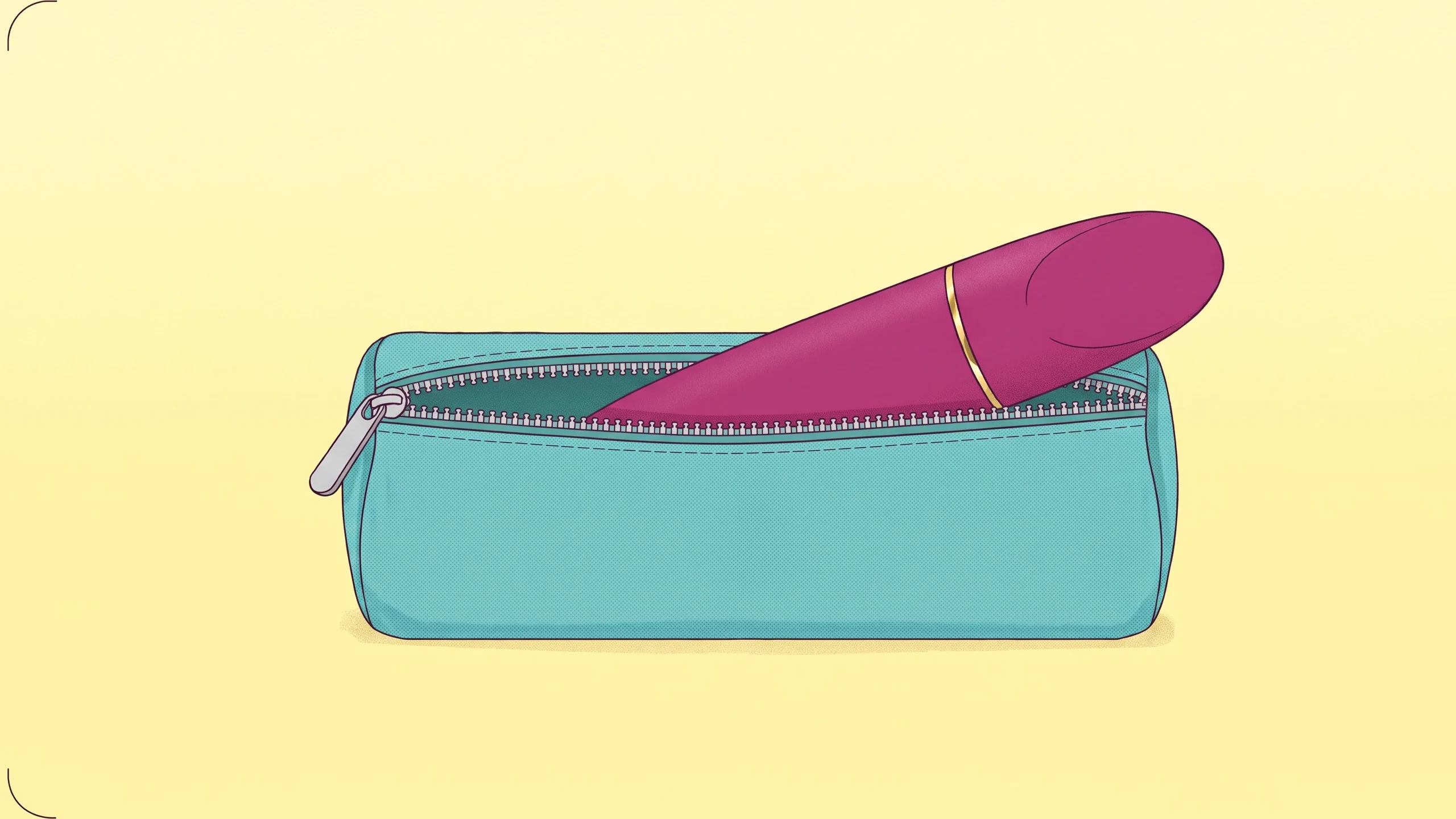
The MIA 3 has two buttons. Its manual gives the pattern change a double press and uses different presses of the minus button to switch off at different levels. It also shows a built-in USB plug under the cap. That is something to picture beside the socket you would use. If the socket is recessed or sits beside another device, check how much room there is. The MIA 3 overview has more about the model.
The term lipstick can be a good clue about storage. If you need a broad grip, ask whether the maker publishes a width and weight. Try holding a similarly sized object for a few seconds. See where your thumb lands, whether you want more room, and whether you would be comfortable holding the object while reaching for a control.
Mini wand for a separate handle
A wand has a head you can distinguish from its handle. The handle gives you a place to hold it away from the head, which can be useful when the short grip of a compact model feels awkward. Check how much of the overall length belongs to the handle. Lovehoney lists its Power Play Mini Wand at 6.5 inches, about 16.5 cm, and describes it as rechargeable with a travel lock. Other wands can have different power supplies and lock instructions.
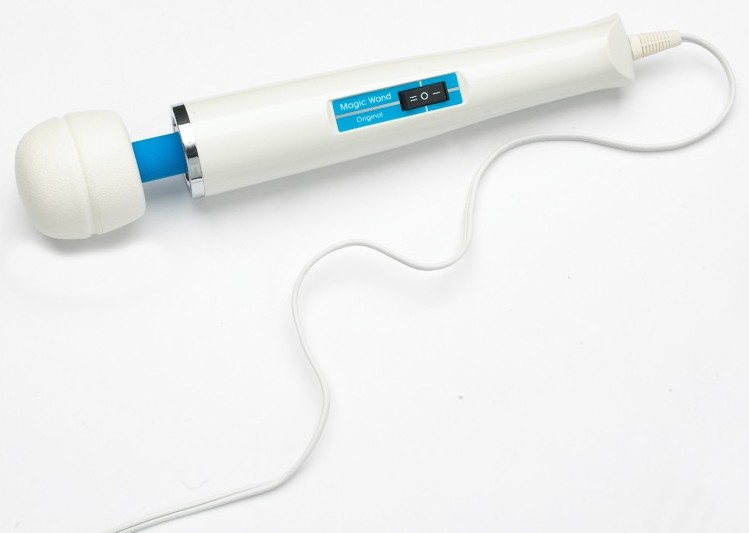
The full-size wand in the photo illustrates the shape. For the Power Play Mini Wand’s own dimensions and features, use its specification overview. Take account of head height as well as length if the wand will live in a shallow drawer. A head that fits across the drawer may still stop it closing, especially if you’re using a case.
The handle changes your reach. If you’re comparing models for easier gripping, find a view of the back as well as the control side. Look for the point where the body narrows, and for a width or weight measurement if either matters to you. A longer handle can give you room to shift your hand. The weight and balance are worth checking separately.
Try one constraint against the scale
Use the size comparison to check a measurement you’ve actually taken. It shows published length. A 12 cm limit leaves about 2 cm beyond the Tango X and just under 1 cm beyond the MIA 3. Neither allowance accounts for the wall of a zip case or the cable. Get a paper strip that represents the length and see where it can sit when the case closes.
Match the measurements before comparing them. If one listing gives length in inches and the other uses centimetres, multiply inches by 2.54. Read the labels beside the numbers. A circumference describes the distance around the object, which is a different measurement from the width across it. If the only number you have is circumference and the opening of your case is tight, ask for the width at the widest point. A handle and a wand head can have quite different widths.
My case is narrow at the zip
Measure the opening and check the model's widest point. Start with the compact examples. If a listing gives only length, ask for the width before ordering.
I want enough room to move my hand
Look for a separate handle or a clear section for gripping. Use a side view to see whether your thumb can reach the control you need from that position.
I want to turn it off in one familiar action
Open each model's manual. Check the off action from more than one setting and see whether it changes with intensity or mode.
If several constraints matter, start with the one you can measure. Suppose you know the case has 12 cm of room and you’d like a separate handle. The size comparison rules out the 16.5 cm example for that case. You can decide whether you’re willing to use a larger case before comparing handle shapes. This gives you two real choices: change the storage or look for a model that fits it.
Compare controls and sound with the same kind of evidence
A control count is easy to scan and hard to interpret. One physical button can do several things depending on how long you press it. Two manuals can tell you more about ease of operation than ten photos from two retailer listings. Choose an action you will need, such as turning the device off, and read the steps for both before deciding.
If a listing describes a device as quiet, find out what was measured and how. A published sound figure tells you more when it comes with a distance, background level and setting. The sound you hear can also depend on what the product rests against. The three products here are examples drawn from published specifications. Use independently documented observations if noise, feel or balance is what will decide your purchase.
App or remote control can appear on products of different shapes. Ask what can be changed directly on the device and what requires a phone or remote. If you want to keep using it without the extra device, check the manual for those controls. If you’re shopping for remote use with someone else, check whether the product requires a nearby Bluetooth connection or supports the distance you need. The shape cannot tell you that.
If you already own a model you’re replacing, use it as your measuring stick. Write down where your hand ends up, how you switch it off, and what you want to change. You may like the length and wish you had a clearer button. That detail helps you compare new models without giving up a part of the design that already works for you. If a review describes a different grip, look for a labelled close-up or a measurement you can use yourself.
Use the exact model’s directions for use and care
Check which uses the manufacturer describes before deciding how a shape will fit your routine. A taper, broad head or smooth surface isn’t enough to identify intended use. The same goes for water exposure. Find the care instructions for the model and check what they say about rinsing, drying and charging. If you are comparing alongside a lubricant, use the lubricant label guide to work through compatibility.
Keep one candidate for each shape that can meet your main requirement. If the two surviving models are almost the same size, compare their grips or off controls before you look at price. Once you’ve settled on a shape, the first vibrator buying guide takes you through checking the box contents and the total at checkout.
For a dedicated breakdown of external stimulation mechanisms, read our comprehensive guide on what is a clitoral vibrator and how to choose.
Quick check
A model fits by length in the scale. Will it fit through the opening of a narrow zip pouch?
Check the pouch opening against the widest part
The chart compares overall length. Measure the usable opening before deciding on a snug fit.
Use the longest measurement on the chart
That helps with space along the pouch. You still need the widest part of the toy and the width of the opening.