On this page
The short answer
An external condom rolls onto the penis. An internal condom is a pouch with an outer ring that stays outside the body during vaginal sex. Use one new condom at a time, check the instructions and get prompt advice if it splits, slips or leaks.
What to do when a condom slips
1. Stop and check
Let's stop. I think the condom came off.
Check what happened and when.
2. Decide what advice to ask for
Can we call and ask what we need to do today?
A service can advise about emergency contraception, STI testing and PEP where relevant.
3. Give the service the time
The condom slipped this evening. Can you tell me where to get help now?
Bring up possible recent HIV exposure and pregnancy risk as soon as you call.
The boxes look similar on a pharmacy shelf. Inside, one wrapper contains a condom that rolls down, and the other contains a pouch with two rings. That difference changes who can put it on or in, when it can go on or in, and what you need to check during sex. If you’re about to use an unfamiliar type, keep the packet directions nearby and give yourself time to read them.
What each condom is for
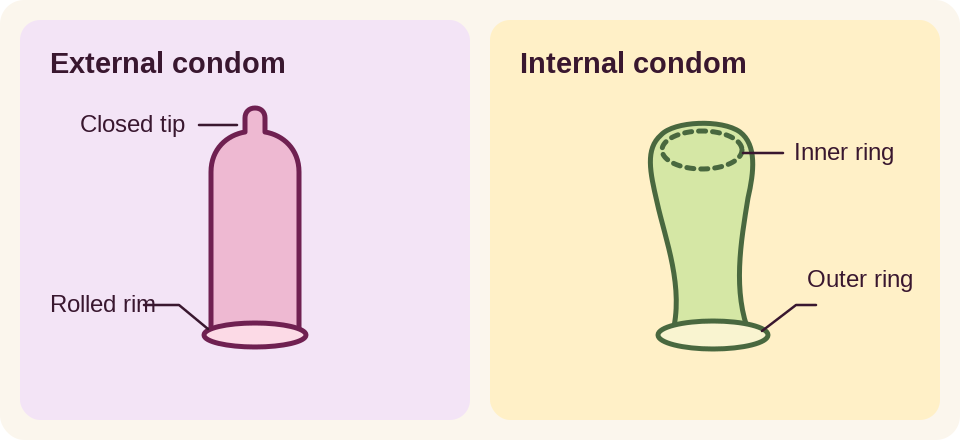
An external condom fits over the penis. The NHS describes it for vaginal, anal or oral sex. People also put external condoms on some sex toys, following the toy and condom instructions. An internal condom for vaginal sex has a closed end with an inner ring that helps hold the pouch in place, and an outer ring that stays visible outside the vagina. Either type can help prevent pregnancy during vaginal sex and reduce the risk of many sexually transmitted infections (STIs) when used correctly.
For anal sex, the NHS says that internal condoms may help protect against STIs and that evidence is limited on how much protection they offer. If you’re considering this use, speak to a sexual health service and check the product directions. The instructions for vaginal insertion below describe vaginal use.
Before you open the packet
Check the expiry date and whether the packet looks intact. Look for a CE or UKCA mark, as recommended in the NHS condom guidance. Read the material on the wrapper or outer carton. If you have a latex allergy, ask for a latex-free option and read the label before you use it. If either person is using a genital or anal medicine, ask a pharmacist whether it can affect the specific condom material. The NHS advises against using latex condoms with antifungal medicine applied to those areas.
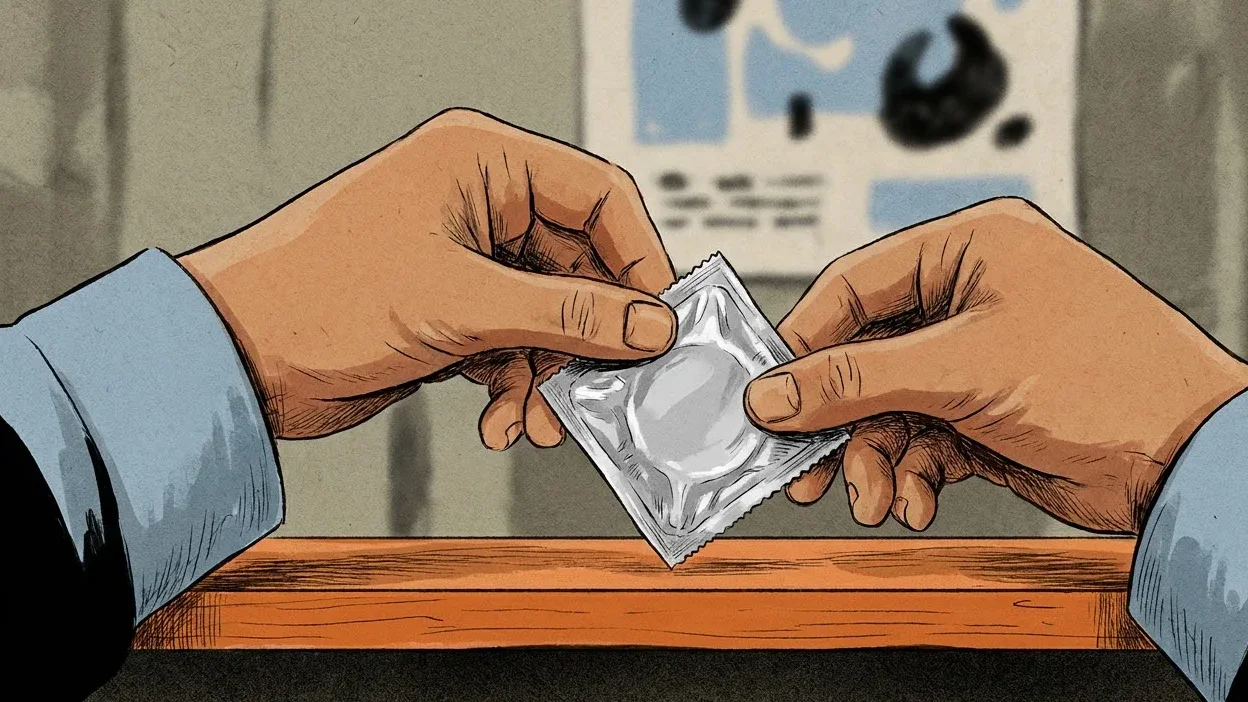
Have a spare within reach. It’s easier to start again with a fresh condom when you can open one without getting dressed or interrupting the room to go looking for it. Keep directions for a new type where you can see them. If a packet is damaged or has expired, choose a fresh one. Open the wrapper with your fingers, keeping teeth and sharp nails away from the condom.
How to put on an external condom
- Put it on an erect penis before sexual contact. The rolled rim should sit on the outside so it can unroll towards the base.
- Pinch the closed tip to squeeze out air. Hold it in place as you unroll the condom all the way down to the base.
- If the rim refuses to roll, use a new one. A condom that touched the penis while the wrong way round goes in the bin.
- When withdrawing after sex, hold the rim at the base to keep the condom in place. Take it off carefully and put it in the bin.
Use a new condom for each new act of sex. If you switch between body openings or share a toy with another person, change the condom and follow the toy’s cleaning instructions. If a condom frequently slips or feels uncomfortably tight, ask a sexual health clinic or pharmacist about sizing. If it keeps rolling up or coming off, pause, replace it and get advice if there may have been exposure.
How to put in an internal condom for vaginal sex
- Find the inner ring at the closed end and the outer ring around the opening. Keep the pouch straight so it can open without twisting.
- Squeeze the inner ring and insert the closed end into the vagina. Use a finger inside the pouch to push the inner ring as far in as it will comfortably go, following the product’s instructions.
- Leave the outer ring outside. During sex, make sure the penis goes inside the pouch. If it goes between the pouch and the vaginal wall, or the outer ring gets pushed in, stop and check what happened.
- After sex, twist the outer ring to keep any semen in the pouch as you gently remove it. Put the used condom in the bin.
The NHS says an internal condom can be inserted up to eight hours before sex. Check the directions for the product in your hands. An internal condom is single-use, just like an external condom. Use one condom at a time. Wearing an external condom together with an internal condom, or wearing two of the same type, can lead to splitting.
If you’re using this type together for the first time, agree in advance that either of you can pause to check the outer ring. During penetration, that ring needs to stay outside and the penis needs to go through its opening. A quick check at the start is easier than trying to work out afterwards whether it moved. If you discover that the ring was pushed inside or penetration happened beside the pouch, ask a sexual health service what to do about the possible exposure.
Match the lubricant to the condom material
The NHS advises water-based or silicone-based lubricant with latex condoms. Oil can damage latex. Look out for oil in products you might already have near the bed, such as body lotion or massage oil. For condoms made of other materials, read the label before choosing a lubricant. If you’re using a toy too, check both the toy and the condom directions. A product can agree with one material and cause problems for the other.
A condom may come lubricated already. The product instructions can tell you where to add more, if you need it. If you’re uncertain what an ingredient or packaging claim means, our guide to reading lubricant labels has examples of where to check. If sex is uncomfortable, pause and ask what feels wrong. Comfort is a reason to stop even when the condom appears to be in place.
What the effectiveness numbers measure
The NHS puts external condoms at up to 98% effective at preventing pregnancy with correct use every time and 82% with typical use. It gives corresponding figures of up to 95% and 79% for internal condoms. These estimates concern pregnancy prevention over a year. They give someone comparing long-term contraception a different answer from the one a clinic can give about a single condom failure. Putting on the condom after contact, using the wrong lubricant or having a condom slip can change exposure during a particular encounter.
STI protection is a separate question. Condoms can reduce the likelihood of many infections. Skin outside the area they cover can still come into contact with a partner, which matters for infections passed by skin contact, such as genital herpes. A condom works only while it’s in place. If you are making a decision after a known exposure or symptoms, tell a sexual health service what happened and ask about testing.
Try it. The packet says latex and you only have massage oil.
Leave the oil out. Use a water-based or silicone-based lubricant that the label confirms is suitable with latex. If you need a lubricant you don't have, pause and get the right one.
If a condom splits, slips out of place or leaks
Stop, check what happened and contact a pharmacist, GP or sexual health clinic for prompt advice. If pregnancy could be possible, ask about emergency contraception as soon as you can. Some emergency pills need to be taken within three days and others within five days. A clinic can also advise about a copper IUD and its timing. Give the service dates for all relevant unprotected sex if there was more than one occasion.
If there’s a chance of recent HIV exposure, seek urgent advice from a sexual health clinic or go to A&E if it is closed. If a clinician recommends PEP, start as soon as possible and within 72 hours of exposure. Ask about STI tests and whether you need a repeat sample later. An appointment after a barrier failure can address several questions at once. Try “The condom slipped on Friday night, and I’m not sure what kind of advice I need. Can we go through pregnancy risk, HIV prevention and testing?”
Where to get a condom you can use comfortably
Pharmacies sell condoms, and sexual health services may offer them for free. Ask about stock before travelling if you need an internal condom or a particular latex-free type. If you and a partner have been using different words for the same products, ask the pharmacist or clinic to show you the sealed packaging and explain which type it contains. A short visit also gives you the chance to ask about lubricant and what to do if either of you has had irritation before.
If you bought an unfamiliar type, open a spare at a time when you can see what you’re doing. With an external condom, look at which way the rim unrolls. With an internal condom, identify the closed end and see how the inner ring flexes. Put the practice condom in the bin and keep a sealed one for sex. If you still have a question, bring the outer packaging to a clinic or pharmacy. You will have the manufacturer’s directions to point to when you ask.
Quick check
If you have both types of condom, should you use an internal condom and an external condom together?
Use both at the same time
Using two condoms together can cause friction and increase the chance of damage. Use a single suitable condom and follow its instructions.
Choose one and follow its packet instructions
Use one new condom at a time. If you add lubricant, check what that condom's instructions allow.